|
|||||||||||||||
 |
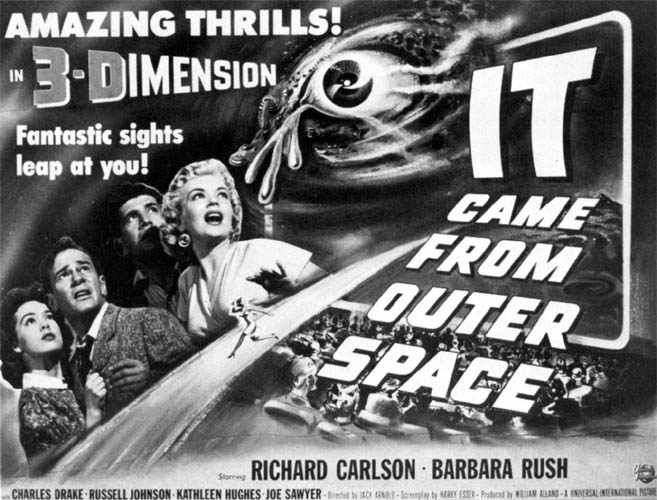
It Came From Outer Space (1953)
|
||||||||||||||||||||||||||||
|
"The Meteor" was a working title for Bradbury's screen treatment, referred to him in passing in various interviews. Curiously, he doesn't seem to have used the title on any of the surviving drafts of the treatment.
Various drafts, and additional documents relating to the development of the film, can be found in It Came From Outer Space, edited by Donn Albright (Gauntlet Press, 2004). |
Screenplay by Harry Essex, from a screen story by Bradbury Directed by Jack Arnold Cast: Richard Carlson, Barbara Rush, Charles Drake, Joe Sawyer, Russell Johnson, Kathleen Hughes |
|
|||||||||||||||||||||||||||
|
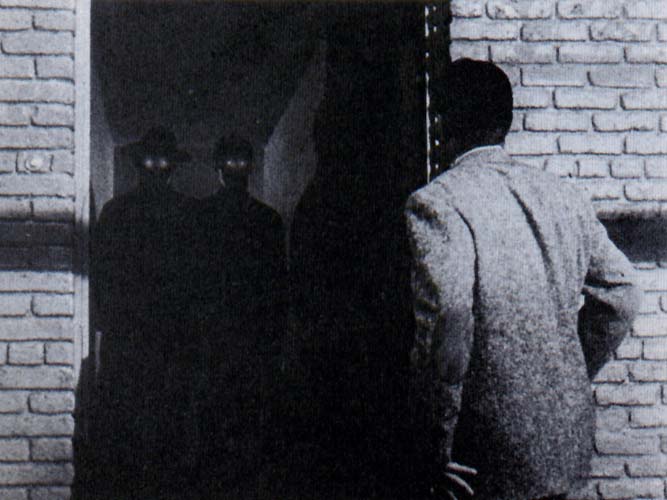
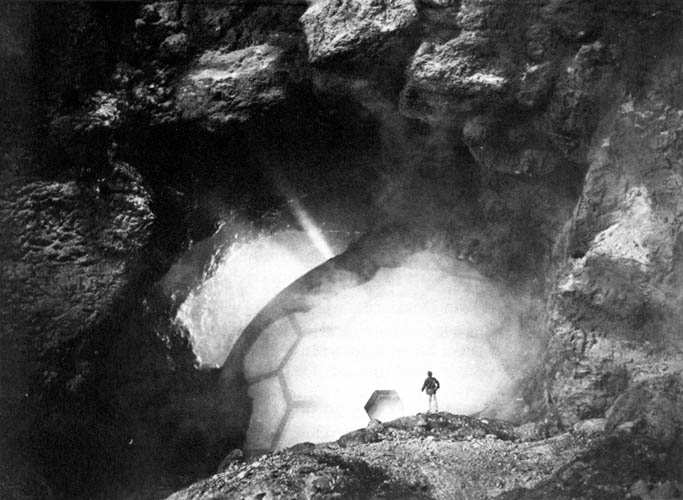
A meteor lands, but turns out to be a space ship. Townsfolk disappear and return, not their usual selves. |
|||||||||||||||||||||||||||||
|
Considered to be one of the better 1950s SF movies, this had the added thrill of 3D. There isn't much here that is obviously Bradbury, but some of the desert settings wouldn't be out of place in a Bradbury story. As with Beast from 20,000 Fathoms, Bradbury's input and influence was limited, but at least in this case he worked directly on the early scripts: "Universal called me in; at this point I had never done any screenplays. They were leery of me, not sure if I could it, and I , of course, knew I could. They put me to work on an idea of theirs which I didn't like very much at the time. But I tried to do something halfway decent with it and as time went on, I finally had to voice my opinions to producer William Alland. I told him that I didn't think too highly of the original idea and that I would write two versions of it. One to please me, one to please you, and then two weeks from now I'll turn in 30 or 40 pages of each idea and I'll do my best with both. Naturally, it's hard to do something well that you don't believe in and I submitted two outlines and said 'Now you have a choice. If you go your way, I quit! If you go my way, I'll stay on and do it because I won't take money under false pretences.' So, by God, a few days later he calls me and says, 'We're going your way...stay on.' Which showed damn good taste on his part. Because their idea - they really didn't know what they were doing. Then I proceeded to do not just a short outline, or even a short treatment, but a 90 to 100 page treatment and that's a screenplay, isn't it? You're giving the screenwriter everything he needs and I wasn't being paid to do that so it was very foolish of me. I'm an enthusiast, when I get excited about things I can't stop myself, I just go all out and my agents have to watch me and make sure I have a contract first. If I get excited, I'll get things done in a couple of days. And wouldn't you know, they pulled me off the project and brought someone else in to write the screenplay. And it's a shame too because later on I met the writer, Harry Essex, and he said that I had given him everything that he needed and he just walked in, sat down, and adapted. But that's OK, you learn form those things. You learn about your own enthusiasms and good business sense. The film turned out nicely, we all got credit, and the film is still around. The super happy ending of the whole thing came the day I walked into Steven Spielberg's office, three years ago, the morning after I saw the preview of Close Encounters of the Third Kind and Spielberg said, "How do you like your film?" And he explained by saying that Close Encounters could not have existed if he hadn't seen It Came From Outer Space when he was a kid. So there you are, very late in the game, you're able to point to one of your influences and Spielberg's film is a darn good one and a beautiful one. It's kind of great that almost thirty years go by and you have this succession of films of varying quality." Starlog Interview: Ray Bradbury, by Jeff Szalay; Starlog 53, December 1981 |
|||||||||||||||||||||||||||||
 |
|
|
|
|
|
|
|
|
|
|
|
|
|
|
|
|
|
|
|
|
|
|
|
||||||